Sunday, September 15, 2024

Eiffel Tower, Golden Triangle and Seine River ..... A visit to the bewitching City of Light : Vanam Jwala Narasimha Rao

 Eiffel Tower, Golden Triangle and Seine River

A visit to the bewitching City of Light

Vanam Jwala Narasimha Rao

The Hans India (15-09-2024)

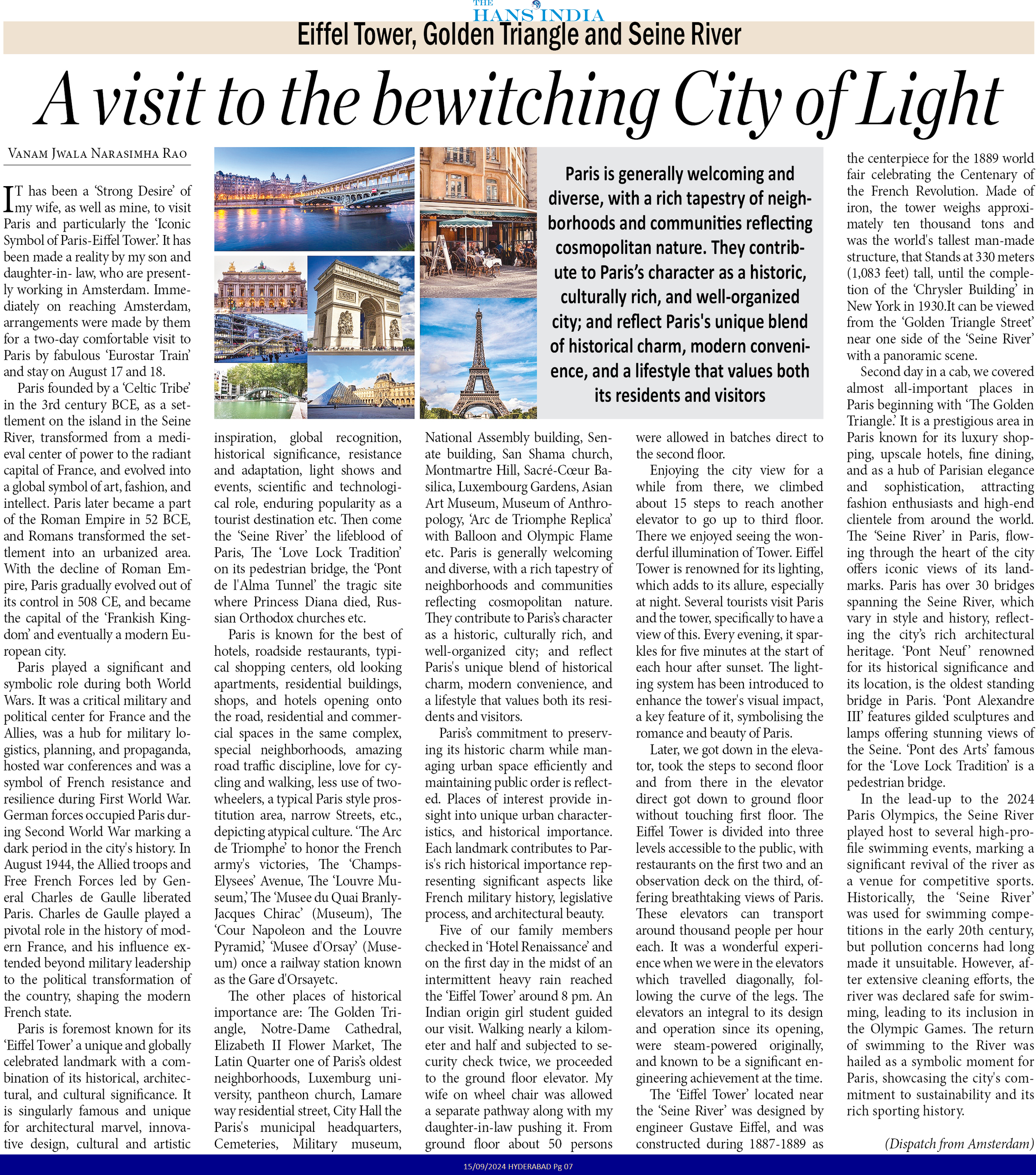
{Paris is generally welcoming and diverse, with a rich tapestry of neighborhoods and communities reflecting cosmopolitan nature. They contribute to Paris’s character as a historic, culturally rich, and well-organized city; and reflect Paris's unique blend of historical charm, modern convenience, and a lifestyle that values both its residents and visitors} – Editor Hans

It has been a ‘Strong Desire’ of my wife, as well as mine, to visit Paris and particularly the ‘Iconic Symbol of Paris-Eiffel Tower.’ It has been made a reality by my son and daughter in law, who are presently working in Amsterdam. Immediately on reaching Amsterdam, arrangements were made by them for a two-day comfortable visit to Paris by fabulous ‘Eurostar Train’ and stay, on August 17 and 18.

Paris founded by a ‘Celtic Tribe’ in the 3rd century BCE, as a settlement on the island in the Seine River, transformed from a medieval center of power to the radiant capital of France, and evolved into a global symbol of art, fashion, and intellect. Paris later became a part of the Roman Empire in 52 BCE, and Romans transformed the settlement into an urbanized area. With the decline of Roman Empire, Paris gradually evolved out of its control in 508 CE, and became the capital of the ‘Frankish Kingdom’ and eventually modern European city.

Paris played a significant and symbolic role during both World Wars. It was a critical military and political center for France and the Allies, was a hub for military logistics, planning, and propaganda, hosted war conferences and was a symbol of French resistance and resilience during First World War. German forces occupied Paris during Second World War marking a dark period in the city's history. In August 1944, the Allied troops and Free French Forces led by General Charles de Gaulle liberated Paris. Charles de Gaulle played a pivotal role in the history of modern France, and his influence extended beyond military leadership to the political transformation of the country, shaping the modern French state.

Paris is foremost known for its ‘Eiffel Tower’ a unique and globally celebrated landmark with a combination of its historical, architectural, and cultural significance. It is singularly famous and unique for Architectural Marvel, Innovative Design, Cultural and Artistic Inspiration, Global Recognition, Historical Significance, Resistance and Adaptation, Light Shows and Events, Scientific and Technological Role, Enduring Popularity as a tourist destination etc. Then come the ‘Seine River’ the lifeblood of Paris, The ‘Love Lock Tradition’ on its pedestrian bridge, the ‘Pont de l'Alma Tunnel’ the tragic site where Princess Diana died, Russian Orthodox churches etc.

Paris is known for the best of hotels, roadside restaurants, typical shopping centers, old looking apartments, residential buildings, shops, and hotels opening onto the road, residential and commercial spaces in the same complex, special neighborhoods, amazing road traffic discipline, love for cycling and walking, less use of two-wheelers, a typical Paris style prostitution area, narrow Streets, etc. depicting atypical culture. ‘The Arc de Triomphe’ to honor the French army's victories, The ‘Champs-Elysees’ Avenue, The ‘Louvre Museum,’ The ‘Musee du Quai Branly-Jacques Chirac’ (Museum), The ‘Cour Napoleon and the Louvre Pyramid,’ ‘Musee d'Orsay’ (Museum) once a railway station known as the Gare d'Orsay etc.

The other places of historical importance are: The Golden Triangle, Notre-Dame Cathedral, Elizabeth II Flower Market, The Latin Quarter one of Paris’s oldest neighborhoods, Luxemburg university, pantheon church, Lamare way residential street, City Hall the Paris's municipal headquarters, Cemeteries, Military museum, National Assembly building, Senate building, San Shama church, Montmartre Hill, Sacré-Cœur Basilica, Luxembourg Gardens, Asian Art Museum, Museum of Anthropology, ‘Arc de Triomphe Replica’ with Balloon and Olympic Flame etc.

Paris is generally welcoming and diverse, with a rich tapestry of neighborhoods and communities reflecting cosmopolitan nature. They contribute to Paris’s character as a historic, culturally rich, and well-organized city; and reflect Paris's unique blend of historical charm, modern convenience, and a lifestyle that values both its residents and visitors. Paris’s commitment to preserving its historic charm while managing urban space efficiently and maintaining public order is reflected. Places of interest provide insight into unique urban characteristics, and historical importance. Each landmark contribute to Paris's rich historical importance representing significant aspects like French military history, legislative process, and architectural beauty.
Five of our family members checked in ‘Hotel Renaissance’ and on the first day in the midst of an intermittent heavy rain reached the ‘Eiffel Tower’ around 8 PM. An Indian Origin Girl Student, guided our Visit. Walking nearly a kilometer and half and subjected to Security Check twice, we proceeded to the Ground floor Elevator. My wife on wheel chair was allowed a separate pathway along with my daughter in law pushing it. From Ground Floor about 50 persons were allowed in batches direct to the second floor.

Enjoying the City View for a while from there, climbed about 15 steps to reach another elevator to go up to third floor. There we enjoyed seeing the wonderful illumination of Tower. Eiffel Tower is renowned for its lighting, which adds to its allure, especially at night. Several tourists visit Paris and the tower, specifically to have a view of this. Every evening, it sparkles for five minutes at the start of each hour after sunset. The lighting system has been introduced to enhance the tower's visual impact, a key feature of it, symbolizing the romance and beauty of Paris.

Later we got down in the elevator, took the steps to second floor and from there in the elevator direct got down to ground floor without touching first floor. The Eiffel Tower is divided into three levels accessible to the public, with restaurants on the first two and an observation deck on the third, offering breathtaking views of Paris. These elevators can transport around thousand people per hour each. It was a wonderful experience when we were in the elevators which travelled diagonally, following the curve of the legs. The elevators an integral to its design and operation since its opening, were steam-powered originally, and known to be a significant engineering achievement at the time.

The ‘Eiffel Tower’ located near the ‘Seine River’ was designed by engineer Gustave Eiffel, and was constructed during 1887-1889 as the centerpiece for the 1889 world fair celebrating the Centenary of the French Revolution. Made of iron, the tower weighs approximately ten thousand tons and was the world's tallest man-made structure, that Stands at 330 meters (1,083 feet) tall, until the completion of the ‘Chrysler Building’ in New York in 1930. It can be viewed from the ‘Golden Triangle Street’ near one side of the ‘Seine River’ with a panoramic scene.

Second day on a Cab and covered almost all-important places in Paris beginning with ‘The Golden Triangle.’ It is a prestigious area in Paris known for its luxury shopping, upscale hotels, fine dining, and as a hub of Parisian elegance and sophistication, attracting fashion enthusiasts and high-end clientele from around the world. The ‘Seine River’ in Paris, flowing through the heart of the city offers iconic views of its landmarks. Paris has over 30 bridges spanning the Seine River, which vary in style and history, reflecting the city’s rich architectural heritage. ‘Pont Neuf’ renowned for its historical significance and its location, is the oldest standing bridge in Paris. ‘Pont Alexandre III’ features gilded sculptures and lamps offering stunning views of the Seine. ‘Pont des Arts’ famous for the ‘Love Lock Tradition’ is a pedestrian bridge.

In the lead-up to the 2024 Paris Olympics, the Seine River played host to several high-profile swimming events, marking a significant revival of the river as a venue for competitive sports. Historically, the ‘Seine River’ was used for swimming competitions in the early 20th century, but pollution concerns had long made it unsuitable. However, after extensive cleaning efforts, the river was declared safe for swimming, leading to its inclusion in the Olympic Games. The return of swimming to the River was hailed as a symbolic moment for Paris, showcasing the city's commitment to sustainability and its rich sporting history.

(Dispatch from Amsterdam)

Sunday, September 8, 2024

వ్యాస మహర్షి భాగవతం ఎందుకు రాశాడు? ..... శ్రీ మహాభాగవత కథ-1 : వనం జ్వాలా నరసింహారావు

 వ్యాస మహర్షి భాగవతం ఎందుకు రాశాడు?

శ్రీ మహాభాగవత కథ-1

వనం జ్వాలా నరసింహారావు

సూర్యదినపత్రిక (09-09-2024)

కంII             చదివెడిది భాగవతమిది,

చదివించును కృష్ణు, డమృతఝరి పోతనయున్

                             చదివినను ముక్తి కలుగును,

చదివెద నిర్విఘ్నరీతి ‘జ్వాలా’ మతినై

మహర్షి వేదవ్యాసకృతమైన శ్రీమద్భాగవతం ‘జన్మాద్యస్య యతో’ అనే శ్లోకంతో ప్రారంభం అవుతుంది. అలాగే పోతనగారి తెలుగు భాగవతం ‘విశ్వజన్మస్థితివిలయంబు లెవ్వని వలన’ అనే పద్యంతో మొదలవుతుంది. జగత్తు సృష్టి, స్థితి, లయలు ఆ పరమాత్ముడి తోనే ఏర్పడ్డాయన్న అర్థంతో రాయడం జరిగింది వీటిని. పరమాత్మ ఉనికితోనే సృష్టికి ఉనికి ఏర్పడిందని దీని భావన. అందువల్ల ఆ పరమ సత్యమైన పరమాత్మను రచయితలు(సంస్కృతంలో వ్యాస మహర్షి, తెలుగులో బమ్మెర పోతనామాత్యుడు) ధ్యానించారు. వ్యాస మహర్షి శ్లోకం, బమ్మెర పోతన పద్యం ఇవే:

శ్లో:       జన్మాద్యస్య యతో న్వయాదితరతశ్చార్థేష్వభిజ్ఞః స్వరాట్

తేనే బ్రహ్మ హృదా య ఆదికవయే ముహ్యన్తి యత్సూరయః

తేజోవారిమృదాం యథా వినిమయో యత్ర త్రిసర్గోऽమృషా

ధామ్నా స్వేన సదా నిరస్తకుహకం సత్యం పరం ధీమహి 

సీ:       విశ్వజన్మస్థితివిలయంబు లెవ్వని వలన నేర్పడు ననువర్తమున

వ్యావర్తనమునఁ గార్యములం దభిజ్ఞుడై తాన రాజగుచుఁ జిత్తమునఁజేసి

వేదంబు లజునకు విదితముల్‌ గావించె నెవ్వఁడు బుధులు మోహింతురెవ్వ

నికి నెండమావుల నీటఁ గాచాదుల నన్యోన్యబుద్ధి దా నడరునట్లు

ఆ:       త్రిగుణసృష్టి యెందు దీపించి సత్యము, భంగిఁదోఁచు స్వప్రభానిరస్త

కుహకుఁడెవ్వఁడతని గోరి చింతించెద, ననఘు సత్యుఁబరుని ననుదినంబు

అరణ్యాలన్నింటిలోకి నైమిశారణ్యం ప్రశస్తమైనది. ఆ నైమిశారణ్యంలోని విష్ణు క్షేత్రంలో శౌనకాది మహామునులు సత్రయాగాన్ని చేయడం మొదలు పెట్టారు. వారంతా తమకు హరికథలు వినిపించమని కోరారు సూతమహామునిని. వారి కోరికను అర్థం చేసుకున్న సూతమహాముని నరనారాయణులకు నమస్కారం చేసి, భారతీదేవికి మొక్కి, వ్యాస భగవానుడి పాదాలకు ప్రణామం చేసి  చెప్పడం ప్రారంభించాడు. దాని సారాంశమే ఇది.

ఈ విశ్వానికి పరమ పురుషుడు ఒక్కడే! ఆయనే పుట్టించడం, పాలించడం, నాశనం చెయ్యడం అనే పనులను బ్రహ్మ, విష్ణు, శివుడు అనే పేర్లతో చేస్తూ ఉంటాడు. ఆ ముగ్గురిలోనూ హరి చరాచర కోటికి శుభాలను ఇస్తాడు. భగవంతుడు 21 అవతారాలను ఎత్తాడు. ఈ కలియుగ-కృతయుగ సంధిలో 22 వ అవతారంలో విష్ణుయషుడు అనే బ్రాహ్మణుడికి కల్కి అనే పేరుతో అవతరిస్తాడు. ఈ అవతారాలన్నీ విష్ణువు అంశతో జన్మించిన వారే. శ్రీరాముడైనా, శ్రీకృష్ణుడైనా, వామనుడైనా, నృసింహస్వామి అయినా అంతా ఆయన అవతారాలే. ఆయన అవతారాల చరిత్ర సమస్తాన్ని భాగవత గ్రంథ రూపంలో వేదవ్యాస మహర్షి చెప్పాడు. శునకుడు అనే తన కొడుకుతో చదివించాడు. సకల వేదాల సారభూతమైనదీ పురాణం. దీనిని శుక మహర్షి పరీక్షిన్మహారాజుకు చెప్పాడు.

అవే విషయాలను తనకు వచ్చిన రీతిలో శౌనకాది మహామునులకు చెప్తానన్నాడు సూతుడు. సూతమహాముని ఈ విషయం చెప్పగానే, భాగవత రచనలోని అంతరార్థం, ఎలా వ్యాసుడు భాగవత రచన చేశాడు, ఎందుకు చేశాడు, ప్రేరణ ఎవరిదీ, ఎందుకీ పురాణ గాథను పరీక్షిత్తుకు శుకుడు చెప్పాడు అని అడిగారు వారంతా. ఆవిషయాలను చెప్తూ ఇలా అన్నాడు:  

ఒకనాడు సకల లోకసంచారి నారద మహర్షి అశాంతితో వున్న వేదవ్యాసుడి దగ్గరకు వచ్చాడు. యధావిధిగా పూజలు అయిన తరువాత వారు సంభాషించారు. తన అశాంతికి కారణం తెలవడం లేదన్నాడు వ్యాసుడు. వ్యాసుడు సకల ధర్మాలను చెప్పినప్పటికీ, విష్ణు కథలను కొంచెమే చెప్పాడనీ, కేవలం ధర్మాలు చెప్తే సరిపోదనీ, గుణవిశేషాలు కూడా చెప్పాలనీ, శ్రీమహావిష్ణువును పొగడక పోవడమే ఆయన అశాంతికి కారణమనీ అన్నాడు నారదుడు. తెలియనివాడికి తెలిసేట్లుగా ఈశ్వరలీలలు గురించి వివరించమని చెప్పాడు. తన జన్మ వృత్తాంతాన్నీ, తానూ ముల్లోకాలు విష్ణు కథా గానం చేస్తూ తిరుగుతున్న వైనాన్నీ వివరించి నారదుడు వెళ్ళిపోయాడు.

నారదుడు వెళ్ళిపోయిన తరువాత ఆయన మాటలు అర్థం చేసుకున్న వ్యాస మహర్షి, ఆ తరువాత, ఏం చేశాడో చెప్పాడు సూతుడు శౌనకాది మహామునులకు ఇలా.

సరస్వతీ నది పడమటి తీరంలో ఋషులు యాగాలు చేసుకోవడానికి వీలుగా బదరీ వృక్షాలతో కూడిన ‘శమ్యాప్రాసం’ అనే ప్రసిద్ధమైన ఆశ్రమం ఉన్నది. అక్కడ కూర్చుని వేదవ్యాసుడు జలాలను వార్చి, తన మనస్సును స్థిరం చేసుకుని, భక్తితో పూర్ణుడైన ఈశ్వరుడిని చూశాడు. నారాయణుడి మీద భక్తి మినహా తనకు వేరే ఉపశమనం లేదని నిశ్చయించుకున్నాడు.

ఈ భూమండలం మీద ఏ మహా గ్రంథాన్ని విన్న మాత్రం చేతనే లోకాలకు ఆధారభూతుడైన మాధవుడి మీద భక్తి విశేషాలు పుడతాయో, అలాంటి, ద్వాదశ స్కంద భాగవతం అనే మహా గ్రంథాన్ని వ్యాస మహర్షి నేర్పుతో వ్రాశాడు. రాసి, దాన్ని నిర్మించి, మోక్షార్థి అయిన శుక మహర్షితో చదివించాడు. శ్రీహరి గుణాలను వర్ణించడం అంటే ఆసక్తికలవాడు, ఆయనమీద అమితమైన భక్తి కలవాడైన శుక మహర్షి ముల్లోకాలకు మంగళకరమైన భాగవత సంహితను పఠించాడు. వేదాలు వేయి సార్లు చదివినా ముక్తి లభ్యం కాదు కాని, భాగవతాన్ని ఒక్కసారి పఠిస్తే ముక్తి లభిస్తుంది.

(బమ్మెర పోతన శ్రీమహాభాగవతం, రామకృష్ణ మఠం ప్రచురణ ఆధారంగా)

Monday, September 2, 2024

శ్రీ మహాభాగవతము, ప్రథమ, ద్వితీయ స్కందాలు : వనం జ్వాలా నరసింహారావు

 శ్రీ మహాభాగవతము, ప్రథమ, ద్వితీయ స్కందాలు

వనం జ్వాలా నరసింహారావు

సూర్యదినపత్రిక (02-09-2024)

          కంII    చదివెడిది భాగవతమిది,

                   చదివించును కృష్ణు, డమృతఝరి పోతనయున్

                   చదివినను ముక్తి కలుగును

                   చదివెద నిర్విఘ్నరీతి ‘జ్వాలా’ మతినై

శ్రీ మహాభాగవతం అనే ఈ మహా పురాణాన్ని సహజ పాండిత్యుడు, బమ్మెర పోతనామాత్యుడు రచించాడు. ప్రధమ స్కందాన్ని విశ్వనాథం సత్యనారాయణ మూర్తి, ద్వితీయ స్కందాన్ని డాక్టర్ దావులూరి కృష్ణకుమారి అనువదించారు. ప్రధమ స్కందం 162 పేజీలు , ద్వితీయ స్కందం 115 పేజీలు  ఉన్నాయి. ప్రథమ స్కందంలో  ఉపోద్ఘాతం దగ్గరనుంచి, శుక మహర్షి పరీక్షిన్మహారాజు దగ్గరికి రావడం వరకు 30 అంశాలున్నాయి. ద్వితీయ స్కందంలో శుకుడు పరీక్షిత్తుకు ముక్తి మార్గాన్ని తెలియచేయడం దగ్గరనుండి నారాయణుడు బ్రహ్మ తపస్సుకు మెచ్చి వరాలు ఇవ్వడం దాకా వివరంగా 6 అంశాలున్నాయి. క్లుప్తంగా ఆ 36 అంశాల వివరాలు తెలుసుకునే ముందర ‘ఉపోద్ఘాతం’, ‘పోతన గారి నిర్ణయం’ అనే శీర్షికల కింద చెప్పబడ్డ పోతన గారి మూడు పద్యాలను మననం చేసుకుందాం.   

శ్రీకైవల్యపదంబుఁ జేరుటకునై చింతించెదన్‌ లోకర

క్షైకారంభకు భక్తపాలనకళా సంరంభకున్‌ దానవో

ద్రేక స్తంభకుఁ గేళిలోలవిలసద్దృగ్జాలసంభూతనా

నాకంజాతభవాండకుంభకు మహానందాంగనాడింభకున్‌

పలికెడిది భాగవతమఁట

పలికించు విభుండు రామభద్రుండఁట; నేఁ

పలికిన భవహర మగునట;

పలికెద వేఱొండుగాథఁ బలుకఁగ నేలా?

ఇమ్మను జేశ్వరాధముల కిచ్చి పురంబుల వాహనంబులున్‌

సొమ్ములు గొన్ని పుచ్చుకొని సొక్కి శరీరము బాసి కాలుచే

సమ్మెట వ్రేటులంబడక సమ్మతి శ్రీహరికిచ్చి చెప్పెనీ

బమ్మెర పోత రాజాకడు భాగవతంబు జగద్ధితంబుగన్‌

పోతన ఆనాటికే అంటే పదిహేనవ శతాబ్దాంలోనే రాజ్యానికి వ్యతిరేకంగా, రాజుకు వ్యతిరేకంగా కవితను భక్తితో కాపాడుకున్నాడు. స్పష్టమైన తన భావాన్ని సూటిగా చెప్పి రాజుల ఆశ్రయాన్ని తిరస్కరించిన కవి పోతన. భాగవతాన్ని తెనిగించి పోతన్న తనజన్మను సఫలం చేసుకున్నాడు. ఆ భాగవత పద్యాలను పఠించి తెలుగు ప్రజలు తమ జీవితాలనే పండించుకున్నారు.

         ప్రధమ స్కందంలో, పోతన గారి ఉపోద్ఘాతం, పోతనగారి  నిర్ణయం, పోతనామాత్యుడి వంశ వర్ణన, ఆరు అంత్య ప్రార్థనలు, భాగవత కథా ప్రారంభం, శౌనకాది మహామునుల ప్రశ్న, సూత మహాముని నారాయణ కథను ప్రశంసించడం, భగవంతుడి 21 అవతారాల వర్ణన ఉన్నాయి. ఆ ఇరవై ఒక్క అవతారాలు:

         శ్రీమన్నారాయణుడి విరాజమనామైన దివ్య రూపం మొదటి అవతారం. ఆ మొదటి అవతారమైన నాభి కమలం నుండి సృష్టి కర్త అయిన బ్రహ్మ పుట్టాడు. శ్రీమన్నారాయణుడి అవయవ స్థానాల నుండి అనేక లోకాలు సృష్టించ బడ్డాయి. మొదట ఆ దేవుడు కౌమార సర్గాన్ని ఆశ్రయించి బ్రహ్మచర్యాన్ని ఆశ్రయించాడు. రెండవ సారి విశ్వ సృష్టి కొరకు రసాతలానికి పోయిన భూమండలాన్ని ఎత్తుతూ వరాహ దేహాన్ని ధరించాడు. మూడవ అవతారం నారదుడు అనే దేవర్షిగా. నాల్గవది నర-నారాయణ రూపం. పంచమావతారం కపిలుడుగా. ఆరవ అవతారం దత్తాత్రేయుడుగా అనసూయాదేవికి-అత్రిమహర్షికి పుట్టాడు. ఏడవ అవతారం యజ్ఞుడు పేరుతో అకూతికి-రుచికి జన్మించాడు. అష్టమ అవతారంలో ఉరుక్రముడు అనే పేరుతో జన్మించి విద్వాంసులకు పరమహంస మార్గాన్ని ఉపదేశించాడు. తొమ్మిదవ అవతారంలో పృధు చక్రవర్తిగా జన్మించాడు.

         పదవ అవతారంలో మహా మీనావతారం దాల్చాడు. పదకొండవ అవతారంలో తాబేలుగా పుట్టి మందరాచలాన్ని మోశాడు. పన్నెండవ అవతారంలో ధన్వంతరిగా జన్మించాడు. పదమూడవ అవతారంలో మోహినీ వేషం ధరించి రాక్షసులను మొహితులను చేసి దేవతలకు అమృతాన్ని పంచాడు. పద్నాలుగోది హిరణ్యకశిపుడిని సంహరించిన నరసింహావతారం. పదిహేనవది బలిని మూడు అడుగులు అడిగిన వామనావతారం. పదహారవది పరశురామావతారం. పదిహేడవది వేదవ్యాస అవతారంగా ఎత్తి వేదాలను విభజించడం చేశాడు. పద్దెనిమిదో అవతారం శ్రీరామావతారం. పంతొమ్మిది-ఇరవైవది బలరామ-కృష్ణావతారాలు. ఇరవై ఒకటో అవతారం బుద్ధావతారం. ఇవికాక కలియుగంలో, యుగసంధిలో కల్కి అనే పేరుతో ఇరవై రెండో అవతారంగా పుట్తాడు.

         ప్రథమ స్కందంలో ఇంకా, వ్యాసుడు వ్యాకులపడి చింతించడం, ఆయన వద్దకు నారదుడు రావడం, నారదుడి పూర్వ జన్మ వృత్తాంతం, అర్జునుడు పాండవ పుత్రులను చంపిన అశ్వత్థామను బంధించి తేవడం, ద్రౌపది అతడిమీద జాలి చూపగా విడిచి పెట్టడం, శ్రీకృష్ణుడు తన సుదర్శన చక్రంతో ఉత్తర గర్భస్థ శిశువు (పరీక్షిత్తు) ను రక్షించడం, కుంతీదేవి శ్రీకృష్ణుడిని స్తోత్రం చేయడం, ధర్మరాజు శ్రీకృష్ణుడితో కలిసి మరణించడానికి సిద్ధంగా వున్న భీష్ముడి దగ్గరికి పోవడం, భీష్ముడు శ్రీకృష్ణుడిని స్తుతించడం, శ్రీకృష్ణుడు ద్వారకానగారానికి వెళ్లడం, నగరం ప్రవేశించి అంతఃపుర కాంతలనందరినీ చూడడం ఉన్నాయి.

         ఇంకా, ఉత్తరకు పరీక్షిత్తు జన్మించడం, గాంధారీ-ధృతరాష్ట్రులు దేహత్యాగం చేసుకోవడం, ధర్మరాజు దుశ్శకునాలు చూసి విచారపడడం, అర్జునుడు ద్వారక నుండి వచ్చి శ్రీకృష్ణ నిర్యాణం గురించి ధర్మరాజుకు చెప్పడం, పరీక్షిత్తు పట్టాభిషేకం-పాండవుల స్వర్గారోహణం, పరీక్షిత్తు మహారాజుగా భూదేవి-ధర్మదేవతల సంవాదం వినడం, కలిపురుషుడు ధర్మ దేవతను తన్నడం,  పరీక్షిన్మహారాజు కలిని నిగ్రహించి ధర్మపాలన చేయడం,  పరీక్షిత్తు శమీక మహర్షి మీద మృత సర్పాన్ని వేయడం, శమీక పుత్రుడు శృంగి పరీక్షిత్తును శపించడం (ఏడు రోజుల్లో తక్షకుడి చేతిలో చావు), మునికుమారుడి శాపం విని ప్రాయోపవేశానికి పరీక్షిత్తు సిద్ధపడడం, శుకమహర్షి పరీక్షిత్తు దగ్గరకు రావడం వరకు ఉన్నాయి ప్రథమ స్కందంలో.

         ద్వితీయ స్కందంలో, శుకుడు పరీక్షిత్తుకు ముక్తిమార్గాన్ని తెలియచేయడం, భక్తి మార్గమే ముఖ్యమని శుకుడు పరీక్షిత్తుకు చెప్పడం, నారదుడు బ్రహ్మను జగత్ సృష్టి గురించి అడగడం, శ్రీమన్నారాయణుడి లీలావతారాల వర్ణన, పరీక్షిత్తు శుక మహర్షిని ప్రపంచోత్పత్తి క్రమాన్ని గురించి అడగడం,  బ్రహ్మ తపస్సుకు మెచ్చి నారాయణుడు వరాలు ఇవ్వడం ఉన్నాయి.

         మరింత వివరంగా చెప్పుకోవాలంటే: పరీక్షిత్తుతో శుకముని సంభాషణలు, భాగవత పురాణ మహాత్మ్యం, ఖట్వాంగుడు ముక్తిపొందిన విధానం, ధారణా యోగానికి చెందిన ఆ మహావిష్ణువు అవయవాలలో సమస్త లోకాలున్న తీరు, సజ్జనుల ప్రవృత్తి, ముక్తికన్నా ఇతరంగా కోరుకున్న వాటన్నిటినీ సిద్ధింపచేయడానికి దేవతలను సేవించే సరణి, ముక్తిప్రదాత ఒక్క శ్రీవిష్ణువే అని చెప్పడం, విష్ణు సేవనం లేని మానవులకు నీచత్వం ఆపాదించడం, పరీక్షిన్మహారాజు ప్రశ్నించడం, శుకముని శ్రీహరిని స్తుతించడం, వాసుదేవుడి దయవల్ల బ్రహ్మ బ్రహ్మాధిపత్యం సంపాదించడం ఉన్నాయి.

అలాగే, శ్రీవిష్ణువు వల్ల బ్రహ్మరుద్రాదిలోక ప్రపంచం ఉద్భవించడం, శ్రీమన్నారాయణ దివ్య లీలలుగల జన్మల పరంపర, అవతార వైభవ విశేషాల్ని సూచించడం, భాగవత వైభవం, పరీక్షిత్తు శుకయోగిని ప్రశ్నించిన ప్రపంచాది ప్రశ్నలు, వాటిల్లో శ్రీహరి కర్తృత్వ ప్రాధాన్యం గల అంశాన్ని చెప్పడం, భగవత్సేవ ఔన్నత్యం, బ్రహ్మ చేసిన తపస్సుకు నారాయణుడు ప్రసన్నుడై వైకుంఠపదంతో సహా సాక్షాత్కరించడం, బ్రహ్మ అతడిని పొగిడి దైవానుగ్రహంతో అతడి ప్రభావాన్ని వినడం, విష్ణువు ఉపదేశం ప్రకారం బ్రహ్మ నారదుడికి భాగవత పురాణంలో ప్రధానమైన పది లక్షణాలు వివరంగా చెప్పడం, నారాయణుడి గొప్పదనం, జీవాదితత్త్వసృజన, శ్రీహరి నిత్యవిభూతి లాంటి విషయ వర్ణన, కల్పాదుల తీరుల సూచనలు, విదుర-మైత్రేయ సంవాదం వినిపించమని సూతుడిని శౌనకుడు అడగడం అనే వృత్తాంతాలు ఉన్నాయి.   

         శుకుడు పరీక్షిత్తుకు ముక్తిమార్గాన్ని తెలియచేయడంలో భాగంగా అనేక ఆసక్తికరమైన విషయాలను చెప్తాడు. క్లుప్తంగా అవి: ‘విరాట్పురుషుడైన శ్రీమన్నారాయణుడిలో పద్నాలుగు లోకాలలో జరిగిన-జరుగుతున్న-జరగబోతున్న సమస్త విషయాలు కనిపిస్తాయి. నేల, నీరు, అగ్ని, గాలి, ఆకాశం, అహంకారం, మహత్తు అనే తత్త్వాలు ఈ విగ్రహం యొక్క ఆవరణాలు. ఇవి బ్రహ్మాండకోశమైన విరాట్ రూపుడి చుట్టూ పొరలు-పొరలుగా చుట్టి ఉంటాయి. ఈ దేహంలో తేజరిల్లే ఆ విరాట్ స్వరూపుడే చిత్తం, ఏకాగ్రతకు చోటైన వాడు. ఆ మహాపురుషుడి రూపం ఎలా ప్రకాశిస్తుంది అంటే.....’

         ‘ఆయన పాదం మోపడానికి ఆధారమైన అరికాలు పాతాళం. ముంగాళ్లు రసాతలం. చీల ప్రదేశం మహాతలం. పిక్కలు తలాతలం. మోకాళ్లు రెండూ సుతలం. తొడలు రెండూ వితలం, అతలం. పిరుదు మహాతలం. బొడ్డు రంధ్రం ఆకాశ స్థలం. రొమ్ము ప్రదేశం సువర్లోకం. ఇది గ్రహాల, నక్షత్రాల తేజస్సముదాయంతో కూడి ఉంటుంది. మెడ మహర్లోకం. ముఖం జన లోకం. నొసలు తపోలోకం. శిరస్సు సత్యలోకం (చివరి ఏడు ఊర్ధ్వ లోకాలు)’.

         ‘ఆయన బాహువులు ఇంద్రుడు మొదలైన వాళ్లు. చెవులు దిక్కులు. శ్రోతేంద్రియం శబ్దం. ముక్కుపుటాలు అశ్వినీ దేవతలు. వాసన చూసే ముక్కు గంధం. నోరు అగ్నిహోత్రుడు. కళ్లు అంతరిక్షం. చూసే ఇంద్రియం అయిన కన్ను సూర్యుడు. కనురెప్పలు రేయి-పగలు. కనుబొమలు బ్రహ్మపదం. అంగిట్లోని రెండు భాగాలైన తాలుపులు వరుణుడు. నాలుక అనే ఇంద్రియం రసం, అంటే రుచి. మాటలు నాలుగు వేదాలు. కోరలు యముడు. దంతాలు పుత్రాదుల మీద వుండే ప్రేమ. నవ్వులు మాయలు. పుట్టుకల పరంపర కడగంటి చూపు. పై పెదవి సిగ్గు. కింది పెదవి ఆశ. రొమ్ములు ధర్మ మార్గాలు. వీపు అధర్మం’.

         ‘పురుషాంగం సృష్టి కర్త. అండ కోశాలు మిత్రావరుణులు. మనస్సు చంద్రుడు. అహంకారం రుద్రుడు. గోళ్లు గుర్రాలు, గాడిదలు, ఒంటెలు, ఏనుగులు. నడుము ప్రదేశం పశువులు, మృగాదులు. మాటల నేర్పులు పక్షులు. బుద్ధి స్వాయంభవ మనువు. నివాసం పురుషుడు. షడ్జాది స్వరాలు గంధర్వులు, విద్యాధరులు, సిద్ధులు, చారణులు. ప్రహ్లాదుడు స్మృతి. వీర్యం దైత్యులు, దానవుల సమూహం. ఇలాంటి సర్వమయుడైన విరాట్ పురుషుడి విగ్రహంతో మోక్షగామి (ముముక్షువు) తన మనస్సును సంధానించాలి’.    

         అదే విధంగా శ్రీమహా విష్ణువు బ్రహ్మకు, బ్రహ్మ నారదుడికి, నారదుడు వేదవ్యాసుడికి, ఆయన శుకమునికి చెప్పిన మహాభాగవతం లోని ‘పరాత్పరుడి వల్ల ఈ సమస్త లోకాలు ఎలా ఉద్భవించాయి’ అనే అంశం శుకుడు పరీక్షిత్తుకు చెప్పిన విధానం కూడా ఆసక్తిగా ఉంటుంది. ఆ వివరాల్లోకి పోతే:

         నారాయణుడి మహిమను వర్ణించడం ఎవరి తరం కాదు. ఆ విరాట్ పురుషుడి హృదయాకాశం నుండి ఓజస్సు, సహస్సు, బలం అనే ధర్మాలు పుట్టాయి. సూక్ష్మమైన క్రియాశక్తి వల్ల ప్రాణం పుట్టింది. జీవుడి వెన్నంటి ఆ ప్రాణాలు బయటకు పోతుంటాయి. ఆకలిమంటలు, ఓర్చుకోలేని దాహం కలుగుతాయి. నోటి నుండి దవడలు, నాలుక మొదలైనవి పుట్టాయి. ముఖం నుండి శోభిల్లి ‘పలుకు’ తన రూపాన్ని కోరుకుంటుంది. మాట్లాడాలనే సంకల్పం కలుగుతుంది. విరాట్ పురుషుడి ముఖం నుండి వాక్కు పుట్టింది. దీనికి దేవత అగ్ని. అగ్ని, వాక్కు (మాట) కలయిక వల్లే సంభాషణం వెలువడింది.

మహావాయువు వల్ల ముక్కు పుట్టింది. తేజస్సు నుండి రెండు కళ్ళు పుట్టాయి. సాక్షాత్తు భగవంతుడే చెవికి కారకుడయ్యాడు. దీని దేవత దిక్కులు. పుట్టుకలను కల్పించే పురుషుడి వల్ల చర్మం పుట్టింది. దాన్నుండి రోమాలు పుట్టాయి. వాయువు నుండి చేతులు పుట్టాయి. ఈశ్వరుడి శరీరం నుండి పాదాలు పుట్టాయి. వీటి దేవత విష్ణువు. భగవంతుడి వల్లే పురుషాంగం, స్త్రీ అంగం పుట్టాయి. స్త్రీ-పురుషుల కలయిక వల్ల సంతానం కలుగుతుంది. ఒక శరీరం నుండి మరో శరీరానికి చేరుకోవాలనుకున్నప్పుడు బొడ్డు అనే ద్వారం పుట్టింది. ప్రాణ-అపాన వాయువులను బంధించడానికి స్థానమయింది ఆ బొడ్డే. ఆ బంధం తొలగించడమే మరణం. అలాగే పేగులు, పొట్ట, నాడీ మండలం నిర్మితమయ్యాయి. కామానికీ, సంకల్పానికీ నెలవైన హృదయం పుట్టింది. ఆ తరువాత విరాట్ పురుషుడి తనువు నుండి సప్త ధాతువులు (త్వక్కు, చర్మం, మాంసం, రక్తం, మేధ, మజ్జ, ఎముకలు), ఏడు ప్రాణాలు (భూమి, నీరు, తేజస్సు వగైరా), ఇంద్రియాలు, అహం నుండి పుట్టిన స్వభావాలు, మనస్సు, మతి పుట్టాయి. ఇవన్నీ ఆ పరమేశ్వరుడి స్థూల శరీర భాగాలే! ఇలా ఆ విరాట్ పురుషుడి ఈశ్వర రూపానికి తుదీ-మొదలు ఉండదు.         

ఇలాంటి విషయాలన్నీ ప్రధమ, ద్వితీయ స్కందాలలో చదవగలగడం పూర్వజన్మ సుకృతం.  

మహాకవి బమ్మెర పోతనామాత్య ప్రణీత

(రామకృష్ణ మఠం, హైదరాబాద్ ప్రచురణ)

Sunday, September 1, 2024

Visiting Netherlands’ Hub for Wind Energy : Vanam Jwala Narasimha Rao

Visiting Netherlands’ Hub for Wind Energy

(‘Zaanse Schans’ the Windmill Town in North Holland0

Vanam Jwala Narasimha Rao

The Hans India (01-09-2024)

              {Our visit to ‘Zaanse Schans’, the charming windmill town near Amsterdam, provided us a broad understanding of Netherlands' rich industrial heritage. The ‘Timeless Ambience’ drawing visitors like us into a world where the past breathes with life is superb. The iconic sawing wood exemplifies the ingenuity that powered the Dutch Golden Age} – Editor’s Note

Ever since we arrived in ‘Amstelveen’ in Amsterdam, our top priority has been to visit the ‘Zaanse Schans’ or the ‘Windmill Town’ depicted as the ‘Best Picturesque Area of the City’ that offers a glimpse into the Netherlands' rich industrial past. Accompanied by my son, resident of Amstelveen, we visited and keenly witnessed, this Netherlands’ Hub for Wind-Powered Industry where number of windmills as indispensable to the area's and city’s economy are in melodious action.

My instant memory had gone back to 1980s when I was working as Project Officer of ‘Chetana’ an NGO chaired by the Governor of erstwhile Andhra Pradesh (AP), Late Kumud Ben Joshi, and dynamically engaged in Rural Development Activities. I was introduced to Windmills by ‘Father Michael Antony Windey’ a Belgian Jesuit Priest, who arrived in India, eight decades ago, and pioneered the ‘Village Reconstruction Organization (VRO)’ in India. He dedicated his life to rural development, though he came to India basically to learn Sanskrit and Indian culture in Pune.

Windey though absorbed in Sanskrit Study, was deeply moved by the poverty-stricken rural people, and inspired by philosophy of Gandhi and Jayaprakash Narayan, instantly shifted his focus from academics to social work and community development. He eventually founded the VRO after the 1969 cyclone that hit Coastal Districts of AP. He focused on empowering rural people through reconstruction, education, sustainable development, cultural preservation, and improving the lives of the poor, mainly in five southern Indian states, including erstwhile AP and Tamil Nadu.

Towards ‘Progressive Ruralism Movement’ and considering ‘Village Community’ as the smallest viable unit of ‘Integrated Development’ VRO selected 500 villages with backward communities. Which were isolated, exposed, segregated for reconstruction, and to support thousands of families. He introduced ‘Windmill Technology’ for providing clean, renewable energy to remote underdeveloped areas. The story of ‘Father Windy’ in popularizing ‘Windmill Technology in India’ is a fascinating chapter in the history of rural development in southern Indian states, which gained international recognition, earning him the ‘Knight of the Order of Leopold Award’ the ‘Highest’ from the Belgian Government.

Former AP Red Cross Society Secretary Late Dr AP Ranga Rao, Charted Accountant Jawahar Vadlamani, Senior Journalist Late G Krishna and I accompanied Late Windy and visited few places between Hyderabad and Nagarjuna Sagar including ‘Vinoba Nagar’ three kilometers south of Ibrahimpatnam, where he was working with Windmills. With inputs from G Krishna, my article ‘In Search of Rural Symphony’ reporting Father Windey's innovative approach to rural reconstruction, usage of modern technology with traditional village life to create sustainable development models, was published in Indian Express in 1986. Dr PV Ramesh, a highly committed former IAS Officer is Chairman of VRO now.   

‘Cornelis Corneliszoon’ from North Holland in Netherlands, who invented the ‘Wind-Powered Sawmill’ is credited with formulating ‘Windmills’ also, to convert wind power into mechanical energy efficiently, leading to widespread use in various industries. ‘Windmill Technology’ perfected and popularized in Netherlands, gradually spread to many European Countries like England, Germany, Denmark etc. Even countries like USA, China, and India, adopted wind power as a sustainable energy source, reflecting global shift towards alternative energy sources.   

During our tour in the ‘Windmill Town’ we observed keenly, the meticulously preserved ‘Open-Air Museum’ like area, showcasing traditional Dutch Architecture, Crafts, Artisan Workshops, Working Windmills, that are serving as a testament to the imagination and ingenuity of the Dutch People, who harnessed wind power long before the advent of modern energy technologies. Gradually, Netherlands ‘Windmill Technology’ that was largely driven by innovative Dutch Engineers in the late Middle Ages, did provide a renewable source of power long before the modern energy crisis!!!

‘Zaanse Schans’ or the ‘Windmill Town’ is located in North Holland, in the banks of the ‘Zaan River’ surrounded by lush green fields, traditional Dutch houses, and small canals, just a 35 Kilometers Drive from ‘Amstelveen’ where we are staying. Zaan River played a crucial role in the development of ‘Zaanse Schans’ as an industrial hub. The river provided a convenient transportation route for raw materials, particularly logs, which were floated downstream from Scandinavian countries. Each of the collection of historic windmills in the ‘Windmill Town’ had a specific purpose. Notable windmills include ‘De Kat,’ and ‘De Zoeker.’

‘Traditional Dutch Houses’ painted in characteristic green, represent traditional Dutch architecture and now serve as museums, shops, and workshops. ‘Zaanse Museum’ offers insights into the region's industrial past, and ‘Craft Workshops’ provide an opportunity to see traditional techniques in action. The most prominent windmills are sawmills, specifically designed for cutting timber, and the enthralling one is to see ‘The Wood Cutting Process.’ Logs are fed into the sawmills, where large wind-powered saw blades cut the timber into planks and beams through crankshaft mechanism, an innovation by Cornelis Corneliszoon. Sawmills like ‘Het Jonge Schaap’ played a pivotal role in the shipbuilding industry and other wood-based trades.

There is a strong link between Amsterdam’s geographical challenges, specifically its position below sea level, and the development and use of windmill technology, particularly in land reclamation, in shaping agriculture, and canal system management. The word ‘Nether’ stands for ‘Low’ in the native language, and ‘Netherlands’ means lowland. Due to 60% of its land being below the sea level, Netherlands including Amsterdam have learnt to co-exist with water bodies, implementing sophisticated flood control systems over the last 50 years.

‘Windmill Technology’ astonishingly made it possible for Amsterdam to thrive despite being below sea level. Their innovative use of wind powered pumps lift water from low-lying areas into canals, and direct the water away to rivers or the sea, a process to reclaim land from the sea. Even after the land was reclaimed, windmills when required, pump excess water out, preventing waterlogging. They supported various types of farming, including crop cultivation, dairy farming, and horticulture, by ensuring that fields remained dry and fertile. All this resulted in the Netherlands to become one of the most productive agricultural nations in the world.

Windmills are often positioned near the ‘Dikes’ around Amsterdam and other parts of Netherlands to assist in pumping out any water that seeped through or accumulated behind them. The Netherlands is below sea level, and to familiarize, the Dutch have built ‘Dikes’ which are walls or barriers to hold back the water. As part of the water management system, wind mills ensure the long-term sustainability of the reclaimed land (which the Dutch call as ‘Polders’) from sea,

The ability to reclaim and manage land using windmill technology allowed Amsterdam to expand beyond its original boundaries. The canal system, maintained with the help of windmills, became the lifeblood of Amsterdam’s economy, supporting trade and transportation within the city and beyond. Despite modern technology replacing windmills in water management, the legacy of ‘Windmill-Powered Land Reclamation and Water Control’ evidently forms part of Amsterdam’s landscape, and the ‘Windmill Era Principles’ laid strong foundation for the sophisticated systems of dikes, pumps, and canals in protecting the city.

Our visit to ‘Zaanse Schans’ the charming windmill town near Amsterdam, provided us a broad understanding of Netherlands' rich industrial heritage. The ‘Timeless Ambiance’ drawing visitors like us into a world where the past breathes with life is superb. The Iconic sawing wood exemplify the ingenuity that powered the Dutch Golden Age. The rhythmic turning of the windmill blades transforms the wind energy into a force that cuts wood with precision and efficiency, is a beautiful craft.

‘Windmill Technology’ explicitly depicts Dutch Ingenuity, transforming ‘Waterlogged Delta’ Netherlands into leading ‘Productive Agricultural and Industrial Regions,’ the legacy of which offers powerful lesson for developing and underdeveloped countries.

In conclusion poetically; ‘The Windmills’ Arms Spin like Time's Own Rhyme, in a Dance with the Sky, where the Past and Future Intertwine.’

(Writer is a Senior Independent Journalist: Dispatch from Amsterdam)